
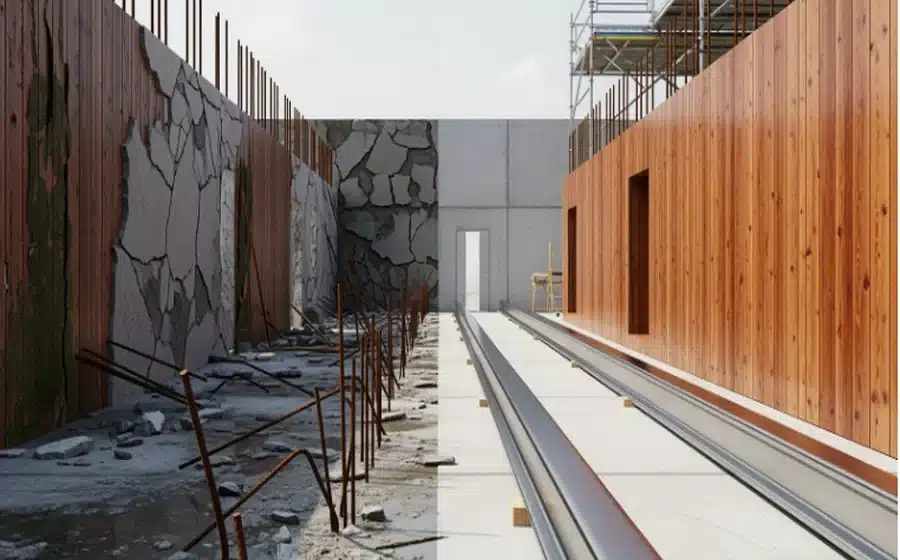

Why do quality materials matter so much? The short answer is that they are the base of any strong, long-lasting project, whether you’re building a large commercial space or updating a home. The materials used in construction affect durability, efficiency, and the overall outcome.
Choosing high-grade materials is not a luxury; it’s a smart investment that pays off over time. For example, for something as basic as sidewalk replacement, picking high-grade concrete is about safety, long life, and fewer future repairs, not just looks. This early choice affects every stage of a structure’s life.
Material choice reaches far past the first invoice. It touches structural strength, safety, visual appeal, and environmental impact. Every item, from tiny fasteners to major beams, affects performance and lifespan. It can be hard to balance cost and quality while keeping a new home affordable, but the long-term gains almost always beat the quick savings from cutting corners.
What Defines Material Quality?
Material quality is measurable. It means a material can do its job reliably over time and under real-life conditions. Key traits include strength, density, and resistance to wear, plus how it reacts to moisture, temperature swings, and UV light.
Quality also shows up in how the product is made, whether it meets industry standards, and whether it carries certifications and warranties. Higher-grade products often use better base ingredients, tighter manufacturing, and careful testing. The result is a product that is strong, consistent, and backed for future use.
Common Misconceptions About Material Choice
A common myth is that cheaper materials save money. They may lower the first bill, but they often lead to more repairs, higher upkeep, and a shorter life for the project. Low-grade choices can cost far more over time.
Another myth is that all materials in one category are the same. They are not. Quality, makeup, and how they are made can vary a lot. For example, some woods resist rot better than others, and some steels hold up to rust better.
Skipping these details can lead to weak performance and surprise problems later. Look past the surface and review the specs and track record of each option.
Key Benefits of Using High-Quality Materials
High-quality materials bring many gains that go far beyond looks. They help projects last longer, work better, and hold value, which makes the extra spend a wise choice.
Improves Durability and Longevity
Strong materials add years to a building. Structures should last for decades, and the materials used play a big role in that outcome. Choices like reinforced concrete, high-grade steel, and weather-resistant wood can handle tough conditions and cut down on repairs.
Well-made products resist wear, keep their shape, and perform well for a long time. That means fewer replacements, less downtime, and a building that ages well while doing its job. Spending more on quality helps the structure stay solid in harsh weather and under heavy use.
Improves Safety and Code Compliance
Safety comes first on any job, and materials matter a lot here. Quality products help a building meet fire, seismic, and structural standards. Items like fire-rated gypsum board, tempered glass, and non-combustible insulation help protect people during a fire, and quake-ready framing can prevent collapse.
Using products that meet local codes and rules is a must. Quality items are usually tested and certified to meet these rules, which lowers the risk of legal trouble, fines, or delays. This protects people and also protects builders and developers. For expert guidance on exterior restoration and structural safety, partner with Nova Construction Services — a trusted leader in repair and restoration that ensures every project meets the highest safety and quality standards.
Boosts Energy Efficiency and Sustainability
Energy use and sustainability are big goals in modern building. Good materials help hit those goals. Better insulation, durable surfaces, and weather resistance can lower energy use, cut utility bills, and shrink the carbon footprint.
Many high-quality products are made with waste and energy reduction in mind, from factory to installation to end of life. Using efficient walls, high-performance windows, and solar systems can lower energy costs and appeal to buyers who value green features.
Increases Property Value and Resale Potential
Using higher-grade materials often raises property value. Buyers like homes and buildings that last, look good, and save energy, and they often pay more for them. Premium finishes and materials signal fewer future fixes and better performance.
A property that looks good and is built to last with safe, durable, and eco-friendly materials usually sells for more. That appeal turns into stronger resale potential, making early spending on quality a smart financial move.
Creates Strong Visual Appeal
The look of a property depends a lot on material quality. Good materials perform well and also look better for longer.
High-grade finishes, textures, and colors create a clean and refined look. Think polished stone floors, quality hardwood for cabinets, or clear, high-grade glass for windows. These choices lift the overall feel of the space.
Cuts Maintenance and Repair Costs
Quality materials may cost more at first, but they often save money across the life of the building. They hold up to wear and reduce early failures, which means fewer surprise bills and less upkeep.
For example, solid hardwood flooring and quality countertops tend to last longer than budget options. Picking durable, resilient products often leads to real savings over time.
Risks of Low-Quality or Inferior Materials
Lower up-front costs can be tempting, but cheap materials often trigger a chain of problems that quickly wipe out any early savings. The downsides are serious and can last for years.
| Choice | Upfront cost | Lifespan | Maintenance | Safety/code risk |
| High-quality materials | Higher | Long | Low | Low |
| Low-quality materials | Lower | Short | High | High |
Shortened Lifespan and Early Failures
The most direct effect of weak materials is a shorter life for the building or its parts. Lower-grade items can weaken the structure and lead to more repairs, higher upkeep, and even major failures. Wear and tear escalates, and big fixes arrive sooner than expected.
Poor concrete can crack, and cheap steel can corrode, which harms structural strength. Early failures add cost and risk, canceling any small savings from the start.
Safety Hazards and Legal Liabilities
Low-grade materials put people at risk. They can cause unstable structures, fire hazards, or exposure to harmful substances. This is an area where human life is at stake.
When safety slips, the chance of accidents rises. That can lead to lawsuits, fines, and serious damage to reputations. The cost, both moral and financial, is far too high to justify weak materials.
Hidden Costs and Unexpected Repairs
Cheap options often hide costs you don’t see upfront. Frequent maintenance, early replacements, and extra labor can pile up fast. The final bill often ends up higher than if quality had been chosen at the start. These surprise costs can blow up budgets and timelines.
Constant fixes also disrupt daily life or business. What looks like a bargain on paper can quickly drain money and time.
Harm to Reputation and Trust
For developers and contractors, material quality affects how people see their work. Delivering solid projects builds trust with clients, investors, and partners. Projects that fail early or need constant repair can stain a brand and lead to lost work. Failing safety checks or code reviews makes the problem even worse.
A strong reputation brings repeat work and referrals. A weak one shuts doors. In a field built on trust, skimping on materials is a risky bet.
How Quality Materials Affect the Construction Process
Beyond long-term results, material choice affects daily work on site. Good materials can speed up tasks, cut mistakes, and help deliver a clean, on-time project.
Streamlines Installation and Reduces Errors
High-grade products are often easier to handle, more consistent, and backed by better support. Accurate dimensions and steady performance reduce fit problems and on-site changes.
This consistency speeds up installation, lowers error rates, and reduces waste. When parts fit right, crews work faster and stick to the plan and budget.
Helps You Follow Design and Architectural Plans
Quality materials help teams match the design. Architects and designers pick materials for their look, strength, and performance. Better products meet those specs closely, so the finished build matches the vision.
Lower-grade items can drift from specs and force compromises in structure and looks. That can leave the final result short of the goal. Using quality materials helps the project deliver what was planned.
What to Look For When Choosing Materials
Picking the right materials is a key step in any build or remodel. Weigh different factors so your choices line up with goals, budget, and expected performance over time.
Evaluating Material Certifications and Warranties
Choose products with solid certifications and warranties. Recognized labels show a product was tested for quality, safety, and performance. These marks add independent proof of reliability and code compliance.
Strong, long-term warranties also matter. Many high-grade items include coverage against defects for years. Budget options may offer little or no warranty, leaving you exposed if something fails. Read the terms so you know what is covered and for how long.
Working With Reputable Suppliers and Contractors
The source affects quality. Work with established suppliers and contractors. They tend to carry better products, keep good quality control, and give useful advice for your needs. They also respond faster when issues arise and offer better support, replacement policies, and site help.
Skilled crews who know how to handle high-grade products are just as important. Even the best materials can fall short if installed poorly. Pick teams with a record of quality work and experience with strong materials.
Balancing Cost With Long-Term Performance
Price matters, but it shouldn’t be the only factor. Compare upfront cost to long-term performance, durability, and upkeep. Spending more now can save money later through fewer repairs, a longer life, and better energy performance.
Think about total cost of ownership, not just the purchase price. A cheap product that needs frequent fixes can cost more than a quality option that lasts.
Choosing Quality: Practical Recommendations
Sorting through many material options can feel overwhelming. A proactive, informed approach helps you pick well. Use the tips below to guide your choices.
Questions To Ask Before Purchasing Materials
- Where is this material sourced, and how is it made?
- What quality control steps does the manufacturer follow?
- How does it rate for durability, weather resistance, and energy performance?
- Does it meet all relevant building codes and safety standards?
- Can you share case studies or references from past projects?
- What warranty is offered, and what exactly does it cover?
- What is the typical lifespan in real-world use?
Warning Signs of Poor-Quality Materials
- Price far below similar products without a clear reason
- No certifications, test data, or a weak/no warranty
- Visible defects: uneven color, rough finishes, warping, damage
- Flimsy feel or strong chemical odors
- Suppliers who dodge questions or push unbranded items at heavy discounts
Quality Materials in Focus: Case Studies Across Applications
The same quality principles apply to homes, businesses, and industrial sites. The benefits show up clearly in each setting.
Home Remodeling and Upgrades
In a kitchen, quality cabinets, countertops, and floors add function and style that last. Granite or quartz counters resist stains and scratches, and high-grade cabinetry handles daily use while keeping its look. In bathrooms, which see a lot of moisture, porcelain tile, solid-surface counters, and moisture-resistant cabinets help prevent mold and mildew and keep the space in good shape.
On the exterior, better siding, roofing, and windows can lift curb appeal, improve energy use, and protect the home from the weather. These upgrades make the home more comfortable and attractive and can raise its resale value.
Commercial and Industrial Projects
In commercial and industrial spaces, stakes are higher. Longevity, safety, and smooth operations matter every day. Engineered composites and high-grade structural parts can meet strict strength needs for heavy-duty use. In warehouses or factories, strong floors and framing that handle constant loads help avoid shutdowns and keep workers safe.
Large developments also tie material quality to brand reputation. Using high-grade facades, roofing, and interior finishes sends a clear signal of reliability, which draws tenants and investors. Picking materials that fit the project’s structural needs, climate, and design goals is key.
Energy-Efficient Buildings
The push for lower energy use has raised the bar for material choice. Better insulation, advanced windows, high-performance wall systems, and reflective roofs cut heating and cooling demand. That brings lower utility bills and a smaller carbon footprint.
Using recycled steel, bamboo flooring, and eco-friendly insulation also reduces resource use and waste. These choices help the planet and appeal to buyers and investors who want greener buildings.
Investing in Quality Materials: The Lasting Impact
Spending more on quality materials is a strategic move with benefits that last long after the final coat of paint. It protects your budget in the future by avoiding fixes caused by weak products. This approach helps a building meet today’s needs and handle future demands.
By putting quality first, builders and developers can balance great looks, lower environmental impact, and good economics. The payoff shows up in higher property value, lower maintenance, and a strong reputation for reliability. In the end, choosing quality materials means building smarter, living better, and creating spaces that stand the test of time-in structure and in the way people value them.

