
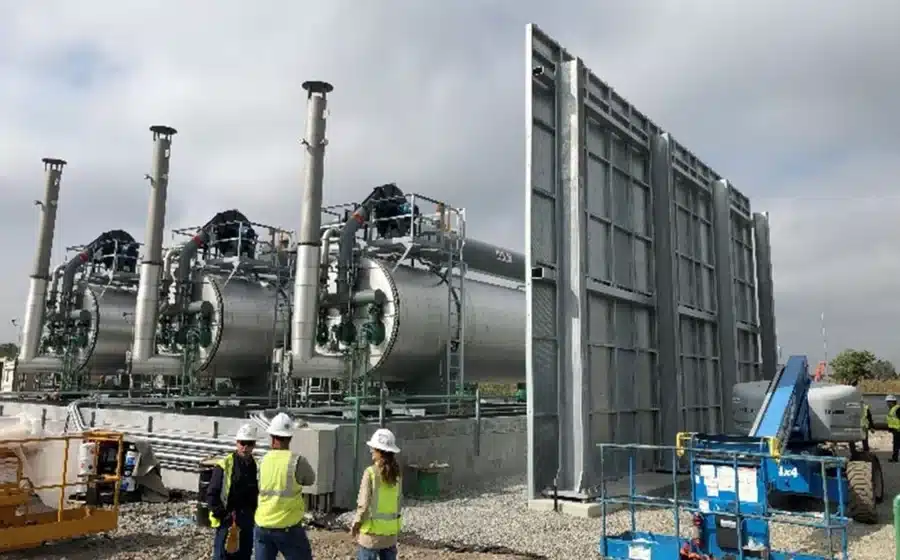

When it comes to protecting critical infrastructure and human lives in high-risk environments, traditional safety measures often fall short. Whether it’s a control center, military post, public transportation hub, or industrial plant, the threat of ballistic impact requires more than ordinary defense systems. This is where ballistic barriers play a transformative role in mitigating disaster and enhancing resilience. We will explore how these barriers operate as unseen guardians, not just absorbing impact but reinforcing the very philosophy of proactive defense.
In an era where safety threats can emerge rapidly and without warning, understanding the function and purpose of ballistic protection systems is key to safeguarding operations, personnel, and national assets. The approach is not about militarization but rather about strategic reinforcement—preventing damage before it occurs.
Reinforcing Security from the Ground Up
Ballistic threats do not arrive with a warning. From hostile attacks to accidental discharges in sensitive environments, the danger they pose is both sudden and devastating. What makes ballistic barriers mission-critical is not just their ability to stop a projectile, but the holistic protection they offer in preserving critical functionality, ensuring personnel safety, and minimizing operational downtime. In places such as electrical substations, transit systems, and command centers, the failure of a single component due to a ballistic breach can lead to catastrophic ripple effects. Loss of power, transportation gridlock, or compromised communication networks can all result from a single point of failure.
Ballistic barriers serve as proactive solutions that integrate seamlessly into infrastructure, preserving the aesthetic and accessibility of the space. Unlike reactive measures that respond to disaster after the fact, these barriers provide embedded resilience. The materials used—ranging from layered steel composites to reinforced concrete—are selected based on the specific threat level and environmental needs, ensuring that each installation addresses real-world scenarios. Far from being passive fortifications, these barriers function as dynamic components of risk management strategy, deterring not only bullets but the broader consequences of impact—disruption, injury, and loss.
Functional Protection Beyond Military Applications
Ballistic protection has often been framed through the lens of military defense, but the application of such technology extends far beyond battlefields. Civilian infrastructure faces increasing exposure to ballistic hazards—from disgruntled attacks on public buildings to stray bullets near transportation hubs or industrial areas. What makes ballistic barriers effective in these non-combat environments is their unobtrusive adaptability. They are designed not just to resist penetration, but to support the continuity of operations.
For instance, power plants and substations—vital to national energy distribution—are now prime candidates for ballistic reinforcement. Any interruption can lead to widespread blackouts, financial losses, and even public safety emergencies. In these contexts, a ballistic event doesn’t just pose a physical threat—it can become a vector for cascading failures. Therefore, the barriers act as a first line of containment, preventing outside violence from breaching critical systems. Beyond static walls, modular designs enable flexible installations across various terrains and architectural styles, accommodating future expansions or redeployments. The goal is never about creating an impression of fear, but rather about embedding intelligent, efficient safety into the very core of modern infrastructure.
The Sinisi Solutions Approach: Engineering for Continuity
One of the few companies leading this field with precision and purpose is Sinisi Solutions. Their ballistic barriers are engineered to address a broad range of scenarios without compromising functionality or design. Whether deployed in substations, transportation networks, or data centers, their systems are built to withstand calibrated threat levels, certified by rigorous testing, and compliant with ASTM and UL standards. What distinguishes their approach is not just material durability, but system integration. Rather than offering one-size-fits-all products, the company tailors each solution to its operational environment, factoring in access requirements, threat probability, existing infrastructure, and aesthetic harmony.
Their fire-rated ballistic walls, for instance, provide dual protection against both projectile threats and thermal hazards, making them invaluable in facilities where fire risk intersects with ballistic exposure. Moreover, Sinisi Solutions recognizes that true protection isn’t static. Their modular systems allow for scalable defense that evolves with changing threat landscapes. As facilities grow or redevelop, the barriers can adapt, expand, relocate, or reconfigure without requiring total demolition. This level of planning and foresight ensures that the solution remains viable over the long term, not just as a reactive shield, but as part of a facility’s growth strategy.
Ballistic barriers are no longer niche defense tools—they’re foundational components of resilient infrastructure. As risks shift from hypothetical to real-world occurrences, the need for embedded, adaptable, and purpose-built protection becomes undeniable. Companies like Sinisi Solutions have demonstrated that such systems can be thoughtfully designed without compromising functionality or aesthetics.
In a world where operational stability is paramount, these ballistic systems aren’t just useful—they’re indispensable. Their role in protecting lives, assets, and essential services cannot be overstated. Future-forward infrastructure planning requires embracing such defense solutions not as last resorts, but as vital safeguards. The cost of inaction is too high, and the margin for error is vanishing. Shielding the line of fire is no longer a choice—it’s a mission-critical imperative.

