
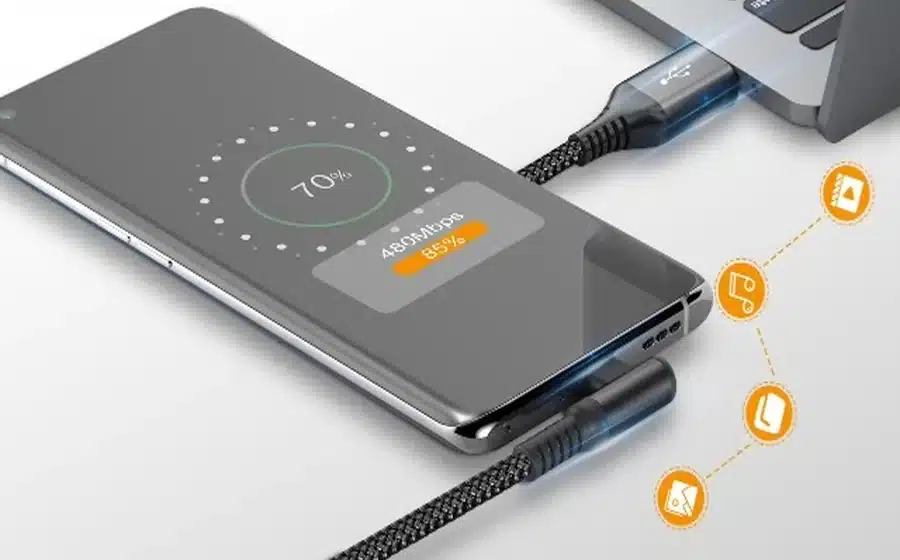

With each passing day, newer and more efficient devices hit the market. Years ago, the USB-C cable emerged as a universal connecter for a wide range of modern devices. It quickly became one of the centerpieces of technological connectivity and transition. In this article, we discuss the rise of USB-C cables and their impact on modern technology.
Understanding USB-C’s Entry into the Market
USB-C was released in the mid-2010s and was branded as the ultimate answer to the non-standardized charging ports. With the multitude of connectors available for older devices, many customers struggled to make the limited set of cables reliable. The design of USB-C aimed turning the spin for a lot of users as it could ease. Avoid the hassle of sorting through a myriad of connectors.
Advantages of USB-C Over Other Chargers
With the advent of USB-C, many users have switched to USB-C ports as it provided a much easier experience compared to its predecessors. Unlike old chargers it does come with a reversible connector which helps eliminate the perennial struggle of orienting the charger in the correct direction as well as providing faster data transfer. From a single cable charger which can do all the tasks needed, USB-C enables users to have multiple functionalities which is loved by both casual users and enthusiasts.
USB-C Is The New Standard in Modern Tech Devices
What makes USB-C one of the best usbs out there is its multipurpose utility. The new USB-C port is slowly taking over the world since it is compatible not only with smartphones and tablets but also with laptops, gaming consoles and a wide variety of accessories. Because It is able to transfer power, data and even video signals makes it the central element of the digital economy and allows seamless connection of power adapter for data transfer and visual output display.
USB-C and Fast Charging Capabilities
The fast charging USB-C Technology enables is one of it’s best features. Devices that are equipped with USB-C ports can be charged much more quickly when compared to the older USB versions. This diminishes the time when a user needs to be tethered to an outlet. In today’s market, increased productivity and convenience have made charging with USB-C drives the go-to option in the market.
How USB-C is Driving Technological Convergence
As people become increasingly sophisticated, there is always a need for technological convergence; a trend that is expertly aided by USB-C cables. USB-C integrates different devices, hence promoting an easier, simplified connected experience with a single cable to aid gadget and peripherals along. This is evidence in the growing use of multi-functional docks and hubs that depend on USB-C to connect several devices.
The Impact of USB-C From an Environmental and Economic Perspective
From a user viewpoint, the universal nature of USB-C presents a good user experience. It also offers wider environmental and economic benefits. Shrinking the number of different ports and connectors that require supporting hardware reduces the cost of production, transportation, electronic waste, and the carbon footprint associated with manufacturing. Moreover, as USB-C ports proliferate, economies of scale are realized, leading to more cost-effective production, lower consumer prices, or both.
How USB-C Helps to “Future Proof” Devices
Adoption of USB-C on devices is a beneficial step toward strategically future-proofing them. With continued technological advancements, the design flexibility of USB-C means it can be improved, updated, or upgraded as needed without requiring a full change of the physical connector. This guarantees tomorrow’s devices will retain the ability to interface with today’s accessories and protects users from rapid obsolescence.
Challenges and Considerations in the USB-C Era
The shift to USB-C still has its share of challenges. The lack of standardized cross-brand compliance usually results in some ambiguity with respect to what certain cables can do and what they cannot do. In addition, while USB-C is quite versatile, it hasn’t reached full universality as some older devices still use outdated USB types or come with proprietary connectors.
Conclusion: Embracing USB-C as the Connector of the Future
The USB-C trajectory recalls, and actually, describes an objective both in tech industries and consumer markets: simplifying and unifying. It is no doubt that this connector serves as the backbone for infrastructure—they help reestablish systemic order while supporting merits of a universal interface and high-powered performance. Any accurately placed comment will ascertain that alongside being a stepping stone towards further innovations, it is held in view as transitional technology and serves to mark acceleration in connectivity.
Advances like the development and implementation of USB-C are indispensable in the wider course of history. They display the breakthroughs that fuel hope for humanity and reveal the relentless drive to innovate on the actual devices that lift society. With concentration in attaining universal compatibility and tech shielding for years, USB-C will surely retain its position within the most critical tech requirements.
To sum up, the emerging use of USB-C cables is a turning point in universal accessibility. It affects the technology world significantly by shaping how we connect devices and charging them, as well as enabling new levels of innovation. With more and more USB-C users in the market, both businesses and individuals, we are getting closer to a reality where connectivity transcends ease of access, becoming a seamlessly integrated element of daily life.